One Tool Too Many: The Hidden Financial Toll of Enterprise's Best-of-Breed Procurement Culture

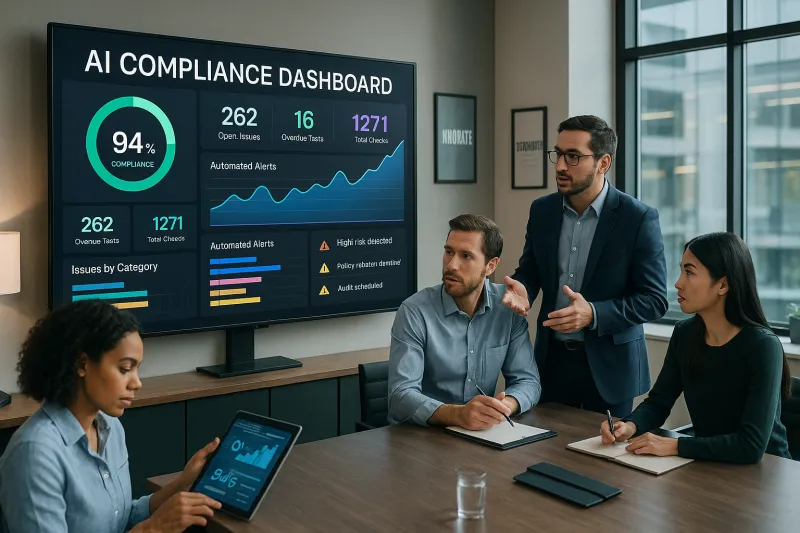
Photo: enterprise software procurement meeting boardroom technology contracts, via sitescdn.wearevennture.co.uk
For decades, enterprise procurement teams have operated under a guiding principle: buy the best available tool for each function, and the organization will perform at its highest potential. On paper, the logic is sound. In practice, it has quietly become one of the most expensive assumptions in corporate America.
Across finance, human resources, cybersecurity, and operations, large organizations now routinely manage portfolios of 200 or more distinct software applications. Each was purchased with legitimate justification. Each promised measurable returns. Yet when finance leaders examine the total cost of ownership across these ecosystems, a troubling pattern emerges — integration expenses, redundant licensing, and maintenance overhead frequently inflate actual expenditure by 40 to 60 percent above initial projections.
This is what analysts increasingly call vendor sprawl, and it is costing American enterprises far more than most boardrooms acknowledge.
How Specialization Became a Liability
The appeal of point solutions is not irrational. When an organization needs a best-in-class payroll platform, a leading-edge threat detection system, or a purpose-built procurement analytics tool, purchasing the market leader in each category feels like responsible stewardship. Procurement teams can defend every line item. Vendors arrive with compelling benchmarks. Category managers feel confident.
The problem surfaces not at the point of purchase but at the point of integration.
Every specialized tool exists within a broader operational ecosystem. Data must flow between payroll and benefits administration. Security event logs must correlate with identity management records. Procurement analytics must communicate with general ledger systems. When each of these tools comes from a different vendor, with a different data architecture, API design philosophy, and update cadence, the connective tissue required to make them function cohesively becomes extraordinarily expensive to build and maintain.
IT departments that are already stretched thin find themselves allocating engineering hours not to innovation, but to keeping existing integrations from breaking every time a vendor pushes a major release. According to industry research, enterprises spend an average of 13 percent of their total IT budget exclusively on integration labor — a figure that compounds with each new tool added to the portfolio.
The Costs Nobody Budgets For
When a procurement team evaluates a new software platform, the analysis typically centers on licensing fees, implementation costs, and projected time-to-value. What rarely appears in the business case is the long tail of operational costs that accumulate over the contract lifecycle.
Consider redundant functionality. In a sprawling vendor portfolio, it is nearly universal for multiple tools to cover overlapping capabilities. An organization might pay for document management features inside its ERP system, its collaboration platform, and a standalone content management solution simultaneously — none of which communicate with the others. A 2023 analysis of Fortune 500 software inventories found that the average large enterprise pays for the same functional capability across an average of 3.4 different tools. That redundancy, multiplied across dozens of functional categories, represents substantial wasted expenditure.
Then there is the training and adoption burden. Each new platform requires onboarding, documentation, and ongoing user education. When employees navigate between eight different interfaces to complete a single workflow, productivity erodes in ways that are real but difficult to quantify. Shadow IT emerges as workers default to workarounds — spreadsheets, email threads, informal messaging — rather than wrestle with fragmented toolsets.
Security risk compounds these challenges. Every vendor in an enterprise portfolio represents an attack surface, a data-sharing agreement, and a potential compliance obligation. The more vendors an organization maintains, the broader the exposure — and the more difficult it becomes to enforce consistent data governance standards across the environment.
The Consolidation Calculation
None of this argues that platform consolidation is universally correct. There are domains where specialized tools genuinely outperform integrated suites, and where the performance differential justifies the integration overhead. The error is not in purchasing point solutions — it is in doing so without a systematic framework for evaluating when that decision makes financial sense.
A sound consolidation analysis requires three distinct layers of evaluation.
The first is functional overlap mapping. Before any procurement decision, organizations should audit existing capabilities across their current portfolio. If a proposed tool replicates functionality already licensed elsewhere, the business case must account for the full cost of that redundancy — or commit to retiring the overlapping capability.
The second is integration cost modeling. IT and finance teams should jointly estimate the full lifecycle cost of connecting a new tool to the existing environment, including not just initial implementation but ongoing maintenance across anticipated version updates. If that figure exceeds 30 percent of the tool's annual licensing cost, the economic case for a more integrated alternative deserves serious examination.
The third is vendor relationship concentration risk. Consolidating too aggressively onto a single platform creates its own vulnerabilities — pricing leverage, feature dependency, and reduced negotiating power at renewal. The goal is not to minimize vendor count at all costs, but to reach a number that the organization can actively manage without structural strain.
Toward Intentional Architecture
The enterprises that are navigating vendor sprawl most effectively share a common characteristic: they treat software portfolio management as a continuous discipline rather than a series of one-time procurement events.
This requires dedicated ownership — whether a platform governance committee, a technology business management function, or an embedded role within the CTO's office — with authority to rationalize the portfolio across business units. It also requires that procurement teams be evaluated not only on the quality of individual purchasing decisions, but on the coherence of the portfolio those decisions collectively produce.
The best-of-breed philosophy was never inherently flawed. Its flaw is in the application — the assumption that optimizing each component independently will produce an optimal whole. In complex enterprise environments, that assumption breaks down quickly and expensively.
Organizations that recognize vendor sprawl as a structural cost driver, rather than an acceptable byproduct of growth, are better positioned to redirect that expenditure toward capabilities that actually advance competitive performance. The question for enterprise leaders is not whether they can afford to rationalize their software portfolios. It is whether they can afford not to.